Ed McMahon -- veteran of two wars
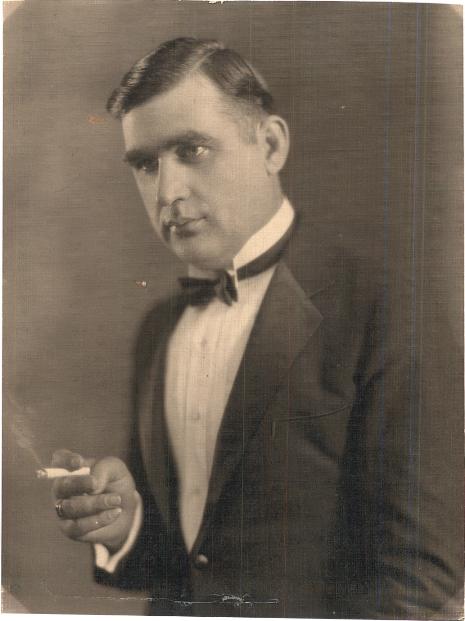
He served in two wars (WW II and Korea), flew 85 combat missions in Korea, and achieved the rank of Colonel in the USMC:
When the United States began gearing up for World War II, McMahon wanted to become a Marine fighter pilot. Since the Navy’s V-5 program required two years of college, he enrolled in Boston College. When the Navy relaxed the two-year requirement, McMahon dropped out of school and signed up. In early 1943, he first went to a civilian-run Wartime Training School in Texarkana where the Navy evaluated cadets’ potential by checking them out in a Piper Cub. Then came the three-month Preflight School at Athens, Georgia. McMahon received primary training at Dallas and intermediate training at Pensacola. McMahon received the single engine carrier syllabus and was assigned to the Marines. After receiving his commission and wings in early 1945, McMahon was sent to the Corsair Operational Training Unit at Lee Field, Green Cove Springs, Florida. Upon completion of training, he was “plowed back” and became an instructor in the same unit. On the day the atomic bomb was dropped on Hiroshima, McMahon received orders to join the Marine carrier program on the West Coast. His orders were cancelled and he returned to civilian life.
After McMahon graduated from Catholic University, he got a job in television in Philadelphia. In two years, he had become Philadelphia’s top TV personality. In 1952, McMahon got his big break when he was offered a job in New York with CBS; however, he was recalled into the Marine Corps due to the Korean War. After several months of training at Miami and El Toro, McMahon arrived in Korea in February 1953. He flew 85 artillery-spotting missions in the Cessna OE Bird Dog before returning home in September 1953. . . . McMahon remained active in the Marine Reserves retiring as a full colonel in 1966.
Makes me look at him in a whole new light. ..bruce w..
]]>
Obama's approval rating as per Rasmussen Reports (6/21/09)
This took a bit longer than I expected, and there’s still a tremendous amount of movement in the value itself, but Rasmussen today recorded its first negative value for the Daily Presidential Tracking Poll since President Obama took office. This value is actually calculated by subtracting the percentage who strongly disapprove of Pres. Obama’s performance from the percentage who strongly approve of his performance. Here’s a chart from Rasmussen itself that shows the convergence and then crossing of those two groups:
Interestingly, the actually division between the overall approve/disapprove numbers has been pretty even for some time — it’s been roughly 55/45 since March, with a little movement in both directions. Given the margin of error (+/- 3%) and the wild swings over the past few months, I’m not sure how significant the first negative value is.
On the other hand, if this were five months into the McCain administration with the same result, I’m sure it’d would be front-page, above-the-fold news on the NY Times and the Washington Post. ..bruce w..
]]>Makes as much sense as any of the financial plans coming out of Congress and the Administration these days. ..bruce w..
]]>
I’m sitting here in LAX, flying home to Denver, and thinking wistfully about the car I got to drive for the last 15 days.
When Sandra and I arrived in LA back on May 29th, I had a Ford Escape reserved at Hertz. I had tried to get a convertible when I had made my online reservations a few days beforehand, but nothing was available. So when we got to the Hertz lot, I went into the Gold Club service kiosk and asked if they had any convertibles, especially Mustangs. The gentleman behind the counter looked through whatever list was on his computer terminal, smiled, and said, “Well, I’ve got a Mustang convertible. And it’s a 2010 model.” I was momentarily startled to realize that 2010 model cars were already out — 2010 was the second Space Odyssey novel/movie, for cryin’ out loud — but, of course, was thrilled to get it.
And it was a great two weeks.
I drove a ‘66 Mustang (289 V8, dark green, black interior) my senior year of high school (1970-71), but my brother Chip took that car off to grad school at Cornell, where it vanished in the snows and salts of upstate New York. Many years later, I owned the same year and model again (yellow, this time), thanks to my (now-former) mother-in-law, but I gave that car to our son Aaron when we kicked him out of the house, mostly so he’d have transportation and a place to sleep. I’ve rented Mustangs (usually convertibles) from Hertz over the years and enjoyed them, but I’ve never considered buying anything later than a 1966 Mustang (ok, maybe 1967).
Up until now.
In the past two weeks, I really fell in love with this car. It looks great and is the first Mustang styling that I like as much as the 1964 1/2 through 1966 models.
It’s fun to drive — handles great, accelerates great. It’s hard to keep from driving 10-20 MPH over whatever the current speed limit is, just because the car does it so well.
And it draws stares. Seriously. In just two weeks, I had three different people comment on the car, twice from the car next to me while I was waiting at a stop light. And one of those — I kid you not — was a 30-ish woman driving a large red SUV who rolled down her passenger window to tell me that it was a great looking car…and that I looked hot in it.
Folks, I’m 56 years old and packing a lot more pounds than I should. My wife, God bless her, thinks I’m good looking, but she’s blinded by love. (She, on the other hand, is indisputably gorgeous; call it the Billy Joel syndrome.) I have never in my entire life had a perfect stranger, female or male, pull up next to me at a stop light and comment favorably on my looks. Until last week. Driving the 2010 Mustang Convertible.
(For the record, I looked back at her, probably with a truly startled look on my face, and then said something clever or witty, like, “Uh…thanks!” I then looked forward at the light. When I looked back again, she had rolled her window back up and was staring straight ahead with a tense/unhappy look on her face — probably wondering just why the hell she had said that, and to someone like me, no less. Hey, folks, I’m telling you — it’s the car.)
So now I’m sitting here in the airport, thinking that we may have our Expedition paid off by the end of the summer . . . and wondering what kind of deal I can get from Ford. We could really use a second car, after all. And if I clear out the garage some, we could get a second car inside. Hmm…. ..bruce w..
]]>
Somewhere before dawn this morning, I started a long, low-key dream in which I was composing a blog post about one of my favorite books: The CRC Handbook of Astronautics. The book was about the same size as the old classic CRC math tables handbooks (as opposed to one of the massive CRC chemistry & physics volumes), but contained a mixture of history, little-known facts, and mathematical details and calculations about the start of manned (and womanned) space flight.
In my dream, I was actually thumbing through the book itself, rediscovering historical items about the early space race between the US and the USSR (including the Russians sneaking onto a US aircraft carrier and recovering a long-stolen historical artifact). I remember hitting the 10-page discussion of calculus around page 162 — a digression to better explain orbital mechanics — and mentally composing a passage about how I almost wept the first time I saw that out of admiration for the authors’ and editors’ willingness to tackle the hard stuff required to understand astronautics rather than dumb the book down. As I went on through the book, I kept expecting it to end post-Apollo, pre-Shuttle, but found that the book kept going on. When it started discussing the US space program under Pres. Clinton, I became puzzled — surely the book was older than that. I checked the copyright date up at the front of the book and saw it was 2006. I thought, “That can’t be right; I’ve had this book for decades.”
At which point I woke up and thought, “Wait — I don’t own the CRC handbook of astronautics; in fact, I’m not ever sure such a book exists.”
As it turns out, it appears there was a CRC Handbook of Space Technology (1985), though I’m sure I never owned a copy. But the Astronautics volume I dreamed about had some great stories, and I wish I could remember them better. :-) ..bruce w..
]]>
Cruisin for burgers
I’m sitting in a 2010 Mustang Convertible being driven by a gorgeous blonde, heading into LA for dinner somewhere around Hollywood.
Life is good. ..bruce w..
UPDATE [6/1/09] Corrected a few typos; between the vibrations in the car itself and the frequent dropping of the AT&T signal as we zoomed along, the message was a bit choppy. The blogging itself was done on an Asus Aspire One netbook with a built-in AT&T 3G modem.
]]>
News overnight that North Korea conducted it’s second nuclear test at it’s test site near Kilju, in the north eastern part of their country. Early indications are that the shot was between 2 Kilotons and 6 Kilotons, a larger yield than their first attempt where the result was a fizzled 500 Tons.
There are conflicting stories that this was a test of refinements to their 4 Kt design that they tried in the first shot, or a test of 20 Kt device similar to one used by the United States in World War 2. If it is a 4 Kt yield from a 20 Kt device, they are still a long way from having a workable weapon. If it was a second try at the 4 Kt Pakistani design, it shows that they got it right.
Neither option means that the North has the means to deliver such a weapon to the battlefield or use it. These tests serve two purposes for North Korea; a political saber rattling against what it rightfully perceives as a weakened and disorganized international community, and to prove to it’s sponsors that they are making progress on nuclear weapons. These weapons may have customers waiting for it in several countries and non-state groups who hope to have a nuclear weapon as a tool.
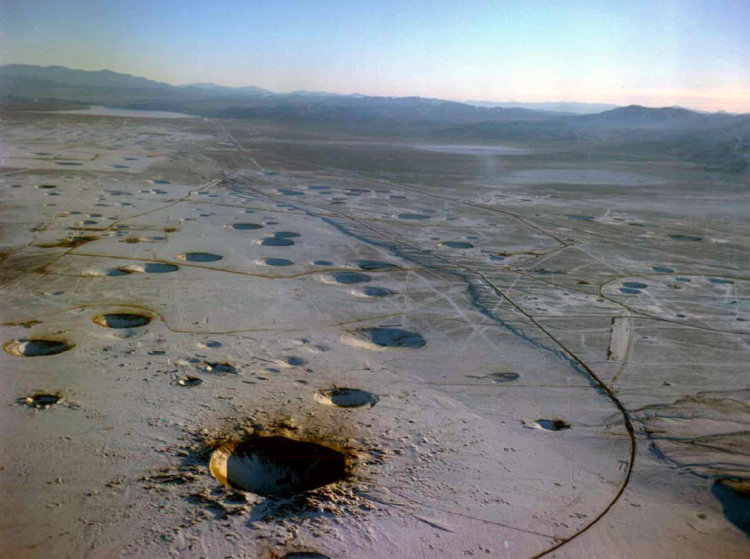
The test was carried out in the same area as the previous failed test, but it seems they dug a second shot tunnel into the north face of the mountain, as opposed to the south face used in the first test.
Imagery of the test area from a previous post to this site are here: Imagery Of North Korean Test Site.
As we have been stating since the 2006 test, the biggest danger here is that the belligerent posture of North Korea will nudge Japan away from it’s pacifist veneer installed after WWII. If Japan decides that there is no defense for Japan forthcoming from the United Nations or the USA, look for it to re-embrace the bushido culture and begin to re-arm. This would be a disaster for the world.
]]>
Ft. Rosecrans National Cemetary
Remembering those veterans from our respective families who have since passed on:
Bruce Henderson:
Bruce Webster:
God bless them, and God bless America, truly the “last, best hope of Earth” (Abraham Lincoln).
]]>And where is that band who so vauntingly swore
That the havoc of war and the battle’s confusion,
A home and a country should leave us no more!
Their blood has washed out their foul footsteps’ pollution.
No refuge could save the hireling and slave
From the terror of flight, or the gloom of the grave:
And the star-spangled banner in triumph doth wave
O’er the land of the free and the home of the brave!– The Star-Spangled Banner (3rd verse), Francis Scott Key
A very interesting change has taken place on the Sun. As readers of this blog know, I have been watching the Sun for some time, especially with regards to the deep solar minimum we currently have between sunspot cycle 23 and cycle 24.
If you look at the image above, you might not see any sunspot activity. It looks like the rest of the visuals we have had from the Sun for the past couple of years, devoid of activity. This is caused by changes deep within the Sun that are part of the normal cycle, albeit one that we have probably not witnessed since we began observing the sun with such precision.
On closer inspection, there are some tiny discoloration just to the left of the center of the image. In fact the agencies that monitor the sun assigned this cluster of solar “plaque” a sunspot number and began to track it. While some scientists may moan that we are now counting any smudge on the sun as a spot, there are some important things happening here.
If we take that section of the image, and enlarge it, we can see it more clearly:

To my eye it seems that the “freckles” are really bordering a circular region of magnetic flux, just as if that circular region were a sunspot. The reason that sunspots look dark is that the are colder than the surrounding surface of the sun. So when we look at them using the filters needed to prevent going blind, they seem as dark areas on the surface of the bright sun.
In some ground breaking work, Drs. Livingston & Penn have been observing that over the decade, the contrast of the spots has been decreasing. That is to say that the temperature of the spots themselves are going up.
What exactly does this mean to any of us? No one knows for sure, but it’s a chance to better understand the physics behind the largest source of energy for our planet,
]]>
I honestly don’t blame the administration for talking up the economy over the past few months. I am sure they wanted to see if they could nudge Americans into coming out of the bunkers and buying again. It worked for George Bush after 9-11, maybe they can give it one more go?
Sadly, Sally and Joe Sixpack are tapped out. Any spare money they have is either going to pay off their debt or being salted away, waiting for the other shoe to drop.
While talk in the press as of late has been that some have seen “green shoots” of a nascient recovery, the larger indicators are showing a different story; a story of a prolonged and deepening crash around the world. Consider this story from the New York Times, Cargo Ships Treading Water Off Singapore, Waiting for Work:
One of the largest fleets of ships ever gathered idles here just outside one of the world’s busiest ports, marooned by the receding tide of global trade. There may be tentative signs of economic recovery in spots around the globe, but few here.
So many ships have congregated here — 735, according to AIS Live ship tracking service of Lloyd’s Register-Fairplay in Redhill, Britain — that shipping lines are becoming concerned about near misses and collisions in one of the world’s most congested waterways, the straits that separate Malaysia and Singapore from Indonesia.
The root of the problem lies in an unusually steep slump in global trade, confirmed by trade statistics announced on Tuesday.
The gathering of so many freighters “is extraordinary,” said Christopher Pålsson, a senior consultant at Lloyd’s Register-Fairplay Research, the consulting division of Lloyd’s Register-Fairplay. “We have probably not witnessed anything like this since the early 1980s,” during the last big bust in the global shipping industry.
The global shipping fleet lies rusting at anchor in the Malacca Straights, hoping one day to have cargo to cary. Many of these ships were built in the last 10 years by conglomerates and global funds hoping to cash in on the global trade boom they thought would never stop. Those ships were financed through large banks in Europe and the US. What do you think happens whey they can’t make the payments because there are no work for the ships? Subprime super tankers anyone?
No matter how much anyone tries to talk the economy out of the slump, the fundamentals are still showing the worst is yet to come. As we cored out whole industries and sent them over seas, we lost the ability to manufacture our way out of it. All we produce now is debt and crazy derivatives on debt. The market for them disappeared well over a year ago and won’t likely ever come back.
That other shoe? It’s still waiting to drop.
]]>